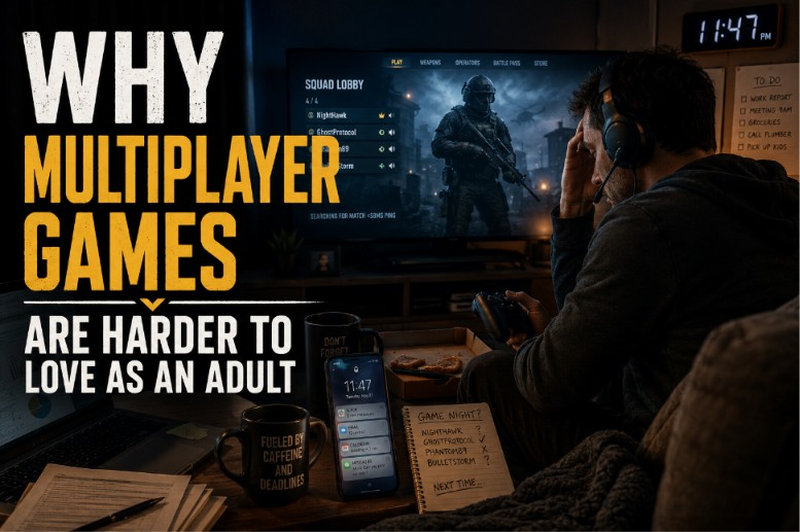
Multiplayer games used to feel easy.
You logged on, joined your mates, played badly for a few hours, laughed at someone falling off a map, and went to bed far later than planned. Nobody cared about battle passes, seasonal metas, ranked grinds, daily challenges or whether your loadout had been nerfed by 4% in the latest patch notes.
Now multiplayer gaming can feel a bit more complicated.
The games are bigger, slicker and more ambitious, but they also ask for more time, more attention and sometimes more patience than most adults have spare. That does not mean multiplayer gaming is worse now. Some of the best games in the world are built around playing with other people. But as life gets busier, the way multiplayer fits into it changes.
The Biggest Enemy Is Time
The hardest part of multiplayer gaming as an adult is not usually the games themselves. It is finding the time to play them properly.
A single-player game waits for you. You can pause it, leave it for two weeks, and come back when life calms down. Multiplayer games are less forgiving. Your friends are only online at certain times. Events end. Ranked seasons reset. New maps arrive. Old tactics stop working. Everyone else seems to keep improving while you are trying to remember which button throws a grenade.
That can make multiplayer feel oddly demanding.
Even organising a session can become a small admin job. One person is working late. One has kids to sort out. One is shattered. One says they will be on at nine, which means ten past ten in real terms. By the time everyone is ready, somebody has to leave.
The game might be fun, but getting to the fun can be the problem.
Keeping Up Can Feel Like Homework
Modern multiplayer games are often designed to keep players engaged for months or years. That can be brilliant when you are fully invested. It gives the game a rhythm, a community, and a reason to keep returning.
The downside is that it can start to feel like homework.
There are battle passes to progress, weekly challenges to complete, limited-time rewards to unlock, currencies to understand, updates to read, new weapons to test, and metas to follow. Some players love that depth. Others just want to play a few matches without feeling like they have missed a training course.
This is where multiplayer can lose older or more casual players. Not because they dislike competition, but because the game asks them to care about too much around the edges.
Sometimes you do not want a live service. You just want a game.
Skill Gaps Get Wider
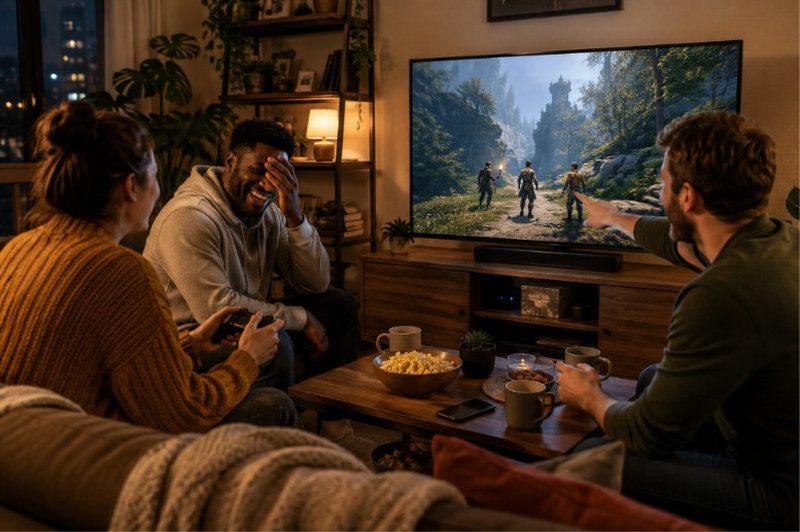
Playing with friends is one of the best parts of multiplayer gaming, but it can also become awkward when everyone plays at different levels.
When you are younger, the group often has similar amounts of free time. As adults, that changes. One mate still plays every night and knows every map, weapon and trick. Another only gets on once a fortnight and spends the first match asking what half the icons mean.
That gap can change the mood quickly.
Competitive games are especially tricky. The better player gets frustrated. The casual player feels like dead weight. The matchmaking does something strange and throws everyone into a lobby full of people playing like there is prize money involved.
Nobody is really doing anything wrong. The group has just outgrown the idea that one game can serve everyone equally.
That is why co-op, casual modes, racing games, survival games and party games can become more appealing with age. They give people a way to play together without turning every evening into a performance review.
Voice Chat Is Not Always The Dream
Multiplayer is supposed to be social, but social does not always mean relaxing.
Voice chat can be brilliant with the right people. It can also be tiring. After a full day of talking, working, parenting, commuting, emailing or generally being a functioning adult, sometimes the idea of putting a headset on and communicating for another two hours feels like a lot.
That is especially true with strangers. Random voice chat can be funny, useful or completely unbearable. Toxic players, background noise, bad microphones, pointless arguments and people treating casual matches like military operations can drain the fun very quickly.
There is a reason many players now stick to private parties, mute everyone else, or avoid voice chat altogether.
The dream of multiplayer is connection. The reality is that sometimes silence is better.
The Best Multiplayer Games Respect Your Life
The multiplayer games that last are not always the ones with the most content. They are the ones that understand how people actually play.
A good adult-friendly multiplayer game lets you jump in quickly. It does not bury the fun under menus, chores and systems. It gives regular players depth without making casual players feel useless. It rewards time spent, but does not punish time away.
That balance is hard to get right.
Players who put in hundreds of hours should feel rewarded. But the game should not become hostile to anyone who only turns up now and then. The moment a multiplayer game starts feeling like a subscription to obligation, it loses some of its magic.
The best ones make returning feel easy.
Co-Op Might Be The Sweet Spot
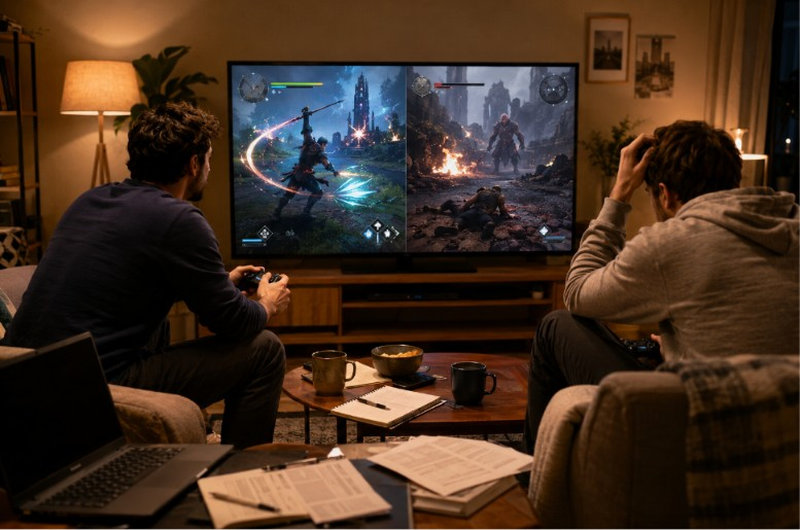
For many adult gamers, co-op is where multiplayer still works best.
You still get the social side, but with less pressure. You can work together, mess up together, and laugh at the chaos without worrying so much about ranks, stats or strangers. A good co-op game gives everyone a role, even if that role is mostly opening the wrong door and causing trouble.
Co-op also handles mixed ability better. One player can lead, another can support, and someone else can run around doing something vaguely useful. It is still multiplayer, but it feels more forgiving.
That matters when gaming time is limited. If you only have a couple of hours, you want them to feel enjoyable, not like an exam.
Multiplayer Is Still Worth It, But Choose Carefully
None of this means multiplayer gaming is dead to adults. Far from it. When it works, it is still one of the best things gaming can offer.
The right game with the right people can turn an ordinary evening into something memorable. It can keep friendships alive, create ridiculous stories, and give you moments that no single-player game could ever script.
But it is worth being pickier.
Not every popular multiplayer game deserves your time. Not every battle pass needs finishing. Not every ranked mode is good for your mood. Not every group has to play the same thing forever just because it used to be the game.
As an adult, the best multiplayer game is the one that fits your actual life. The one that makes it easy to play, easy to enjoy, and easy to walk away from when you need to.
That might be a competitive shooter. It might be a co-op survival game. It might be a racing night once a week. It might be something stupid, messy and low-pressure that nobody online is calling “essential”.
Multiplayer games are harder to love as an adult, but they are not impossible to love. You just have to stop treating them like a second job.
