
Open-world games used to feel like a promise.
Here was a whole world, and you could go anywhere. You were not being pushed down a corridor or dragged from one mission marker to the next. You could wander off, climb something you probably were not supposed to climb, stumble across a strange little side quest, or get completely distracted for three hours by something that had nothing to do with the main story.
That sense of freedom is still one of the best things gaming can offer.
But somewhere along the way, open-world games started to confuse size with quality. Bigger maps. Longer playtimes. More icons. More systems. More collectibles. More things to craft, scan, climb, unlock, upgrade, clear, gather, chase, hunt and tick off.
At a certain point, a world stops feeling open and starts feeling like a to-do list with mountains.
Bigger Does Not Always Mean Better
There is nothing wrong with a huge game world if it earns its size.
Some open-world games feel big because they are full of meaningful places, interesting stories and systems that encourage exploration. The best ones make you want to wander. You see something in the distance and naturally head towards it, not because the game has slapped another icon on the map, but because you are curious.
That is the magic.
The problem comes when scale becomes the main selling point. A massive map sounds impressive in trailers and marketing, but it does not mean much if most of it is empty, repetitive or filled with the same activities copied across different regions.
There is a difference between a world that feels alive and a world that is simply large.
A smaller, denser map can often be more memorable than a huge one. If every area has character, every shortcut matters, and every discovery feels deliberate, the game does not need to stretch itself across endless miles of digital countryside.
The Map Icon Problem
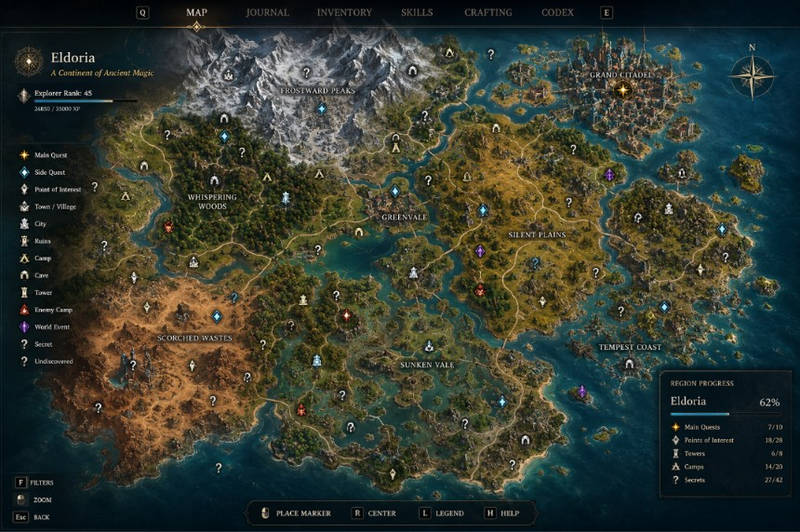
One of the biggest issues with modern open-world games is the map.
Not the landscape itself, but the actual map screen. Open it up and there they are: towers, camps, races, shops, side quests, question marks, hidden items, crafting resources, mini-games, bounty boards, enemy bases, upgrade materials and 48 different symbols that all somehow mean “go here and do a thing.”
At first, that can feel exciting. Loads to do. Loads to see. Great value.
After a while, it can become exhausting.
Instead of exploring naturally, you start clearing icons. You stop asking, “What’s over there?” and start asking, “How many of these are left?” That changes the feel of the game completely. The world becomes less like a place and more like a spreadsheet wearing nice scenery.
The best open-world design encourages discovery without making everything feel like admin. It gives you enough direction to stay engaged, but enough mystery to feel like you are finding things for yourself.
Side Content Needs To Matter
Side quests are meant to make a world feel deeper. They should introduce characters, reveal local problems, change how you see the setting, or give you a memorable little story away from the main plot.
Too often, though, side content becomes filler.
Fetch this. Clear that. Follow these tracks. Collect ten of those. Kill the same group of enemies in a slightly different camp. Listen to a character explain a problem that sounds urgent but somehow waits patiently while you spend 12 hours collecting flowers.
When side content is good, it can be the best part of the game. It gives the world texture. It lets you see smaller stories that would not fit into the main campaign.
But when it is clearly there to bulk out the runtime, players can feel it. Busywork is not the same as content.
A 30-hour game full of strong missions will usually leave a better impression than an 80-hour game where half the time is spent doing chores with a sword, gun or horse.
Open Worlds Can Hurt The Story
There is also a strange tension between open-world freedom and storytelling.
A game might tell you the world is ending, your family is in danger, or the villain is about to unleash something terrible. Then it allows you to spend the next week fishing, gambling, collecting herbs, racing strangers, decorating a base and helping someone find their missing hat.
That is part of the fun, of course. Games are games. They do not need to be completely realistic.
But when the main story is meant to feel urgent, too much side content can weaken the pacing. The emotional momentum gets lost. Characters talk as if everything is desperate, while the player is off trying to unlock a slightly better pair of boots.
The best open-world games understand this tension. They either build a story that suits wandering, or they make the side content feel connected to the larger journey. The weaker ones just throw a dramatic plot into a giant playground and hope nobody notices the mismatch.
Players Have Less Patience For Bloat
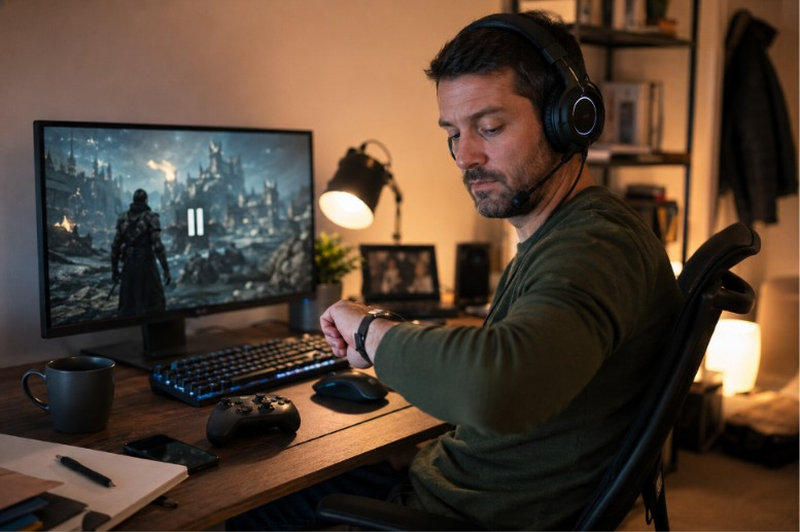
Open-world fatigue is not just about game design. It is also about how people play now.
There are more games available than ever. Backlogs are enormous. Subscription services, digital sales and constant new releases mean most players have more games than time. For adult gamers especially, a huge open world can feel less like a treat and more like a commitment.
“Over 100 hours of content” used to sound like amazing value. Now, depending on the game, it can sound like a threat.
That does not mean players want shorter games only. Plenty of people still love sinking into a big world for weeks. The difference is that the size needs to feel worthwhile. If a game asks for dozens of hours, players are more likely to notice when those hours are being padded.
Time is not just something a game fills. It is something a player gives up.
The Best Open Worlds Respect Curiosity
The best open-world games still understand what made the genre exciting in the first place.
They trust players to be curious. They create places worth exploring. They make travel enjoyable. They hide things that feel genuinely surprising. They allow quiet moments. They understand that not every reward needs to be a new item or a number going up.
Sometimes the reward is just finding a strange building, a beautiful view, a hidden cave, a weird character, or a story you could have missed completely.
That is where open worlds shine. Not when they are huge for the sake of it, but when they make the player feel like the world exists beyond the main path.
Maybe Open Worlds Need To Shrink A Little
Open-world games are not the problem. Some of the best games ever made use open-world design brilliantly.
The issue is bloat.
Bigger maps, longer checklists and endless distractions do not automatically create better adventures. Sometimes they dilute what makes a game special. Sometimes they turn discovery into routine. Sometimes they make players tired before the story has even found its rhythm.
A great open-world game does not need to be the biggest game on the shelf. It needs to be interesting, focused and rewarding to explore.
Maybe the future of open-world games is not about making everything larger. Maybe it is about making worlds that feel more deliberate. More surprising. More alive.
Because the best open worlds are not the ones that take the longest to cross.
They are the ones you actually remember.
